
Sydney Airport parking
Accessible parking and the rules that apply
Practical guidance for travellers with mobility needs across Sydney Airport precincts — where accessible bays sit, how kerbside zones work, and which parking terms govern your stay. Plain summary, with airport documents prevailing.
Level 3, International Terminal, Mascot NSW 2020, Australia · Open 24 hours, 7 days a week
How to use this page before you travel
This page explains airport parking at Sydney Airport for permit holders and their drivers. It covers the 60 accessible bays across the domestic car parks, the 56 bays across the international parking areas, kerbside set-down on the Departures Roadway, pick-up zone timing, and the conditions that apply at entry and on reservations.
Treat it as orientation for parking Sydney airport trips. The airport publishes the operative terms of entry and reservation conditions. Where this summary and those documents differ, the airport documents govern.
Quick check before you book
- Confirm your terminal — Terminal 2 and Terminal 3 use domestic bays, Terminal 1 uses international bays.
- Have your mobility parking permit ready to display as required.
- If you need a lift or step-free route, name it in your enquiry.
- For collections, plan an active pick-up rather than waiting in the zone.
Domestic precinct
Accessible parking at the domestic precinct
Across the three on-precinct domestic car parks, Sydney Airport states there are 60 disability accessible bays serving Terminal 2 and Terminal 3. They are an allocated facility for permit holders — ask for lift proximity when you enquire.
Domestic bays detail
The domestic bays sit within the regular car park buildings rather than in a separate lot, so the walk, lift ride and terminal link depend on which level and which park you are given. If you travel through Sydney airport parking often, you will know the link bridges and lifts differ between parks.
When you enquire, include your terminal, flight time and what matters most — closeness to a lift, a step-free path, or extra door width for transfer. Do not assume a suitable bay will be free on arrival. Naming the need early lets support point you to the right entry and level.
What to include in your message
Terminal, date, length of stay, permit holder name, and whether you need step-free access or lift access. That short note saves a second exchange and helps match you to the right part of the domestic precinct.
Ask about accessible bays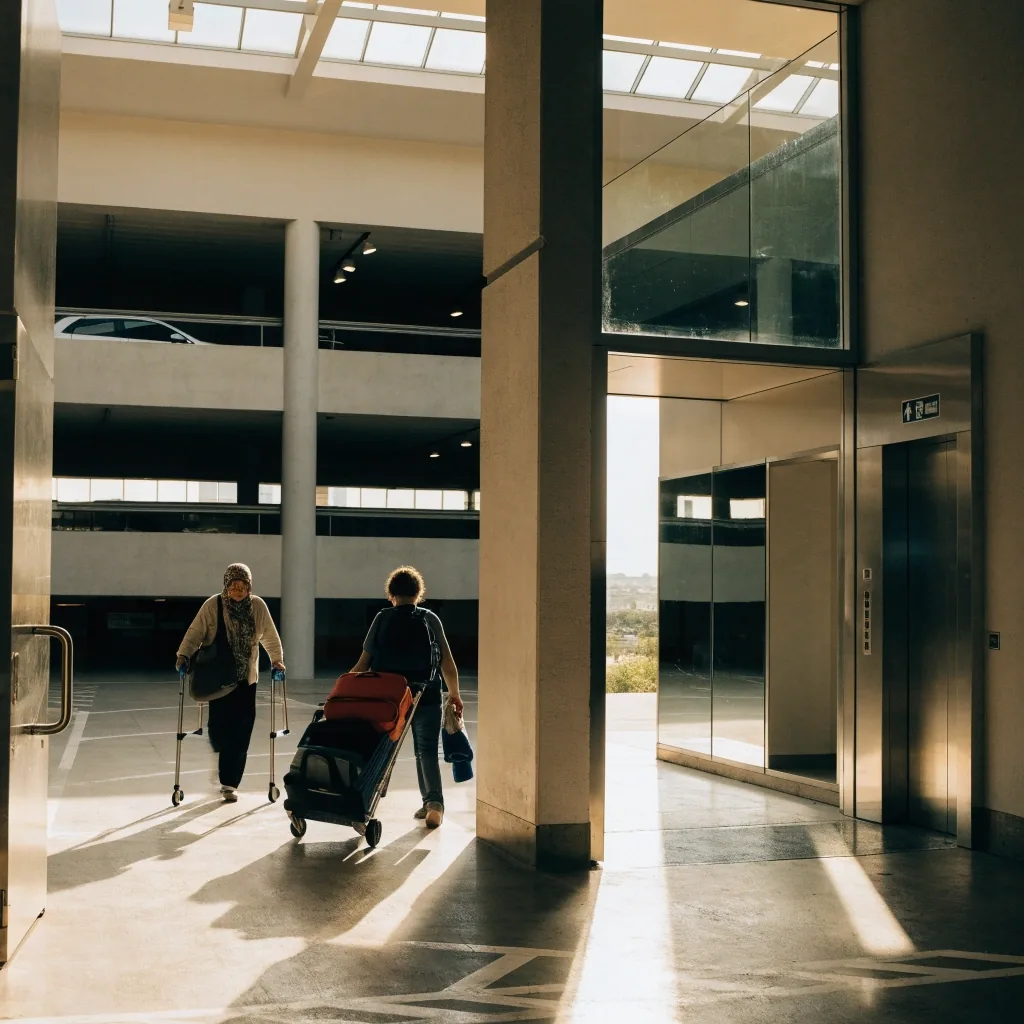
60 bays across three domestic parks. Allocated for permit holders serving Terminal 2 and Terminal 3.
International precinct
Accessible parking at the international precinct
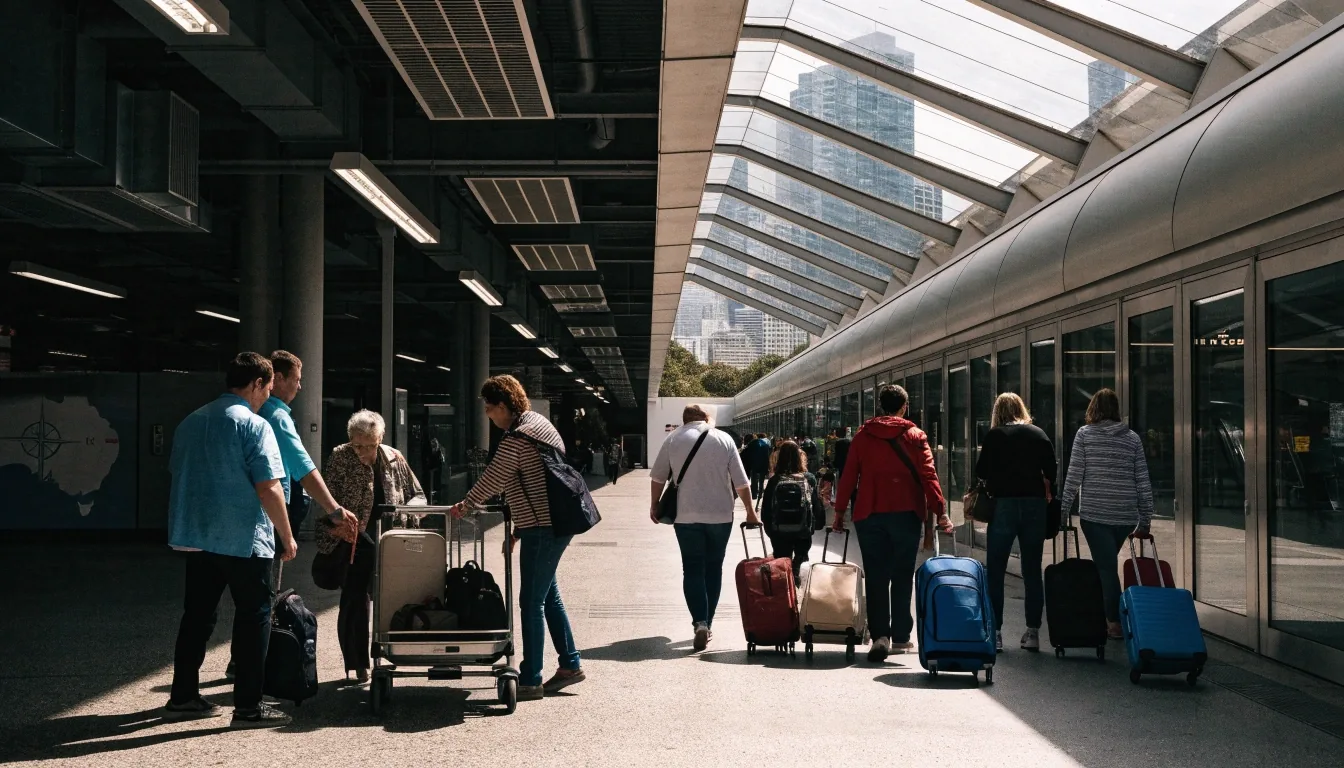
At the international precinct, Sydney Airport states there are 56 disabled bays across three designated parking areas serving Terminal 1. Because the allocation is spread rather than grouped at one door, the distance to check-in can vary by area.
If lift proximity and a short step-free route matter, say so before you book airport parking for a long-haul departure. Mention luggage load and whether you need extra time at the car. Support can then identify which of the three areas fits best.
Why the area matters
One area may sit closer to lifts, another closer to the arrivals hall. For evening departures or tight connections, that difference shapes how much buffer to allow.
Travelling with equipment
If you carry a folding chair, hoist or extra bags, note it. Wider access aisles around accessible bays help, but only if you are directed to one.
Kerbside accessible zones on Departures Roadway
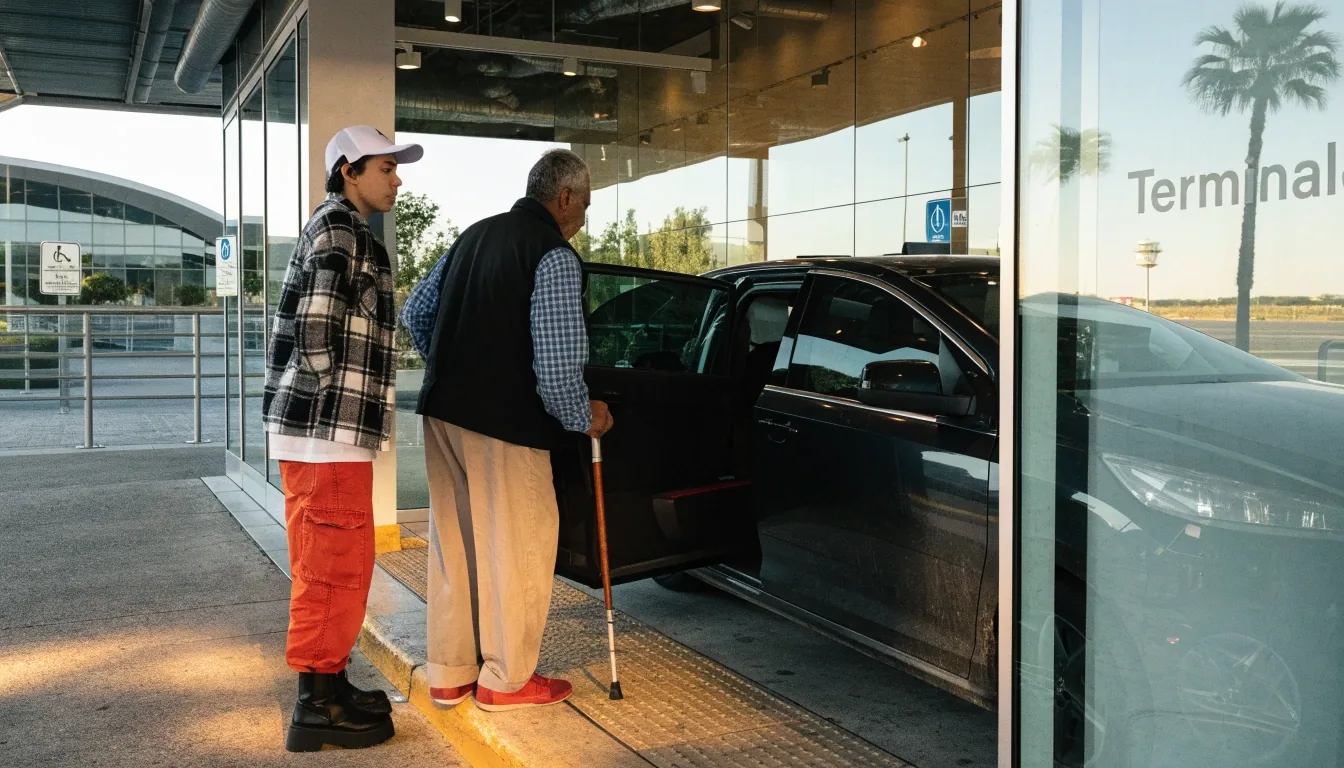
Sydney Airport also describes accessible kerbside zones on the Departures Roadway. These are drop-off points so a passenger with limited mobility can be set down close to the entrance.
They are not waiting bays and not a substitute for a car park bay. If your plan needs more than a brief set-down, use the car park allocation. Drivers who dwell at the kerb risk fines and hold up others who need the same close access.
What mobility parking permit means here
Access to accessible bays is provided for people who hold a mobility parking permit, displayed as required. If you are driving a permit holder as passenger, the passenger permit governs the bay.
This standard arrangement keeps the allocation for those who need it, rather than letting general demand absorb it. Carry the permit, check expiry before a long trip, and keep it visible for the whole stay.
Set down, then move on
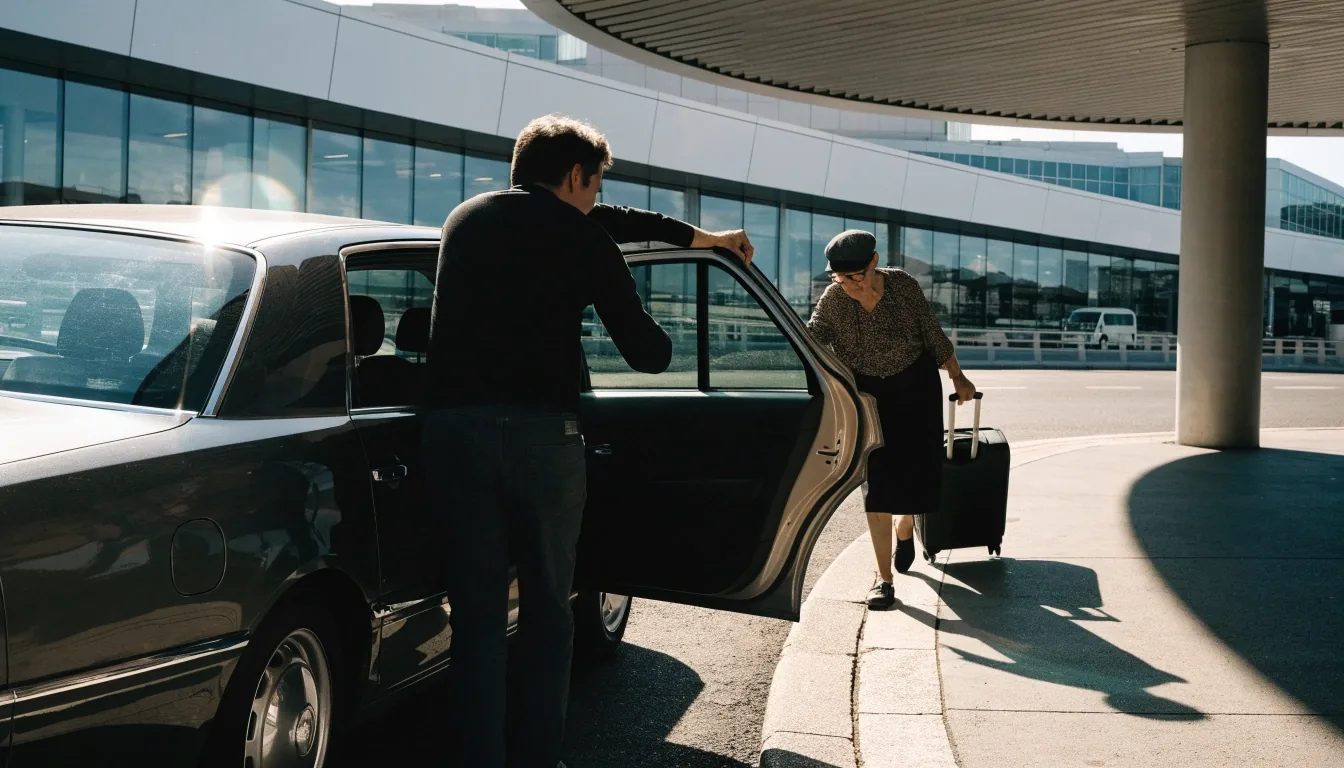
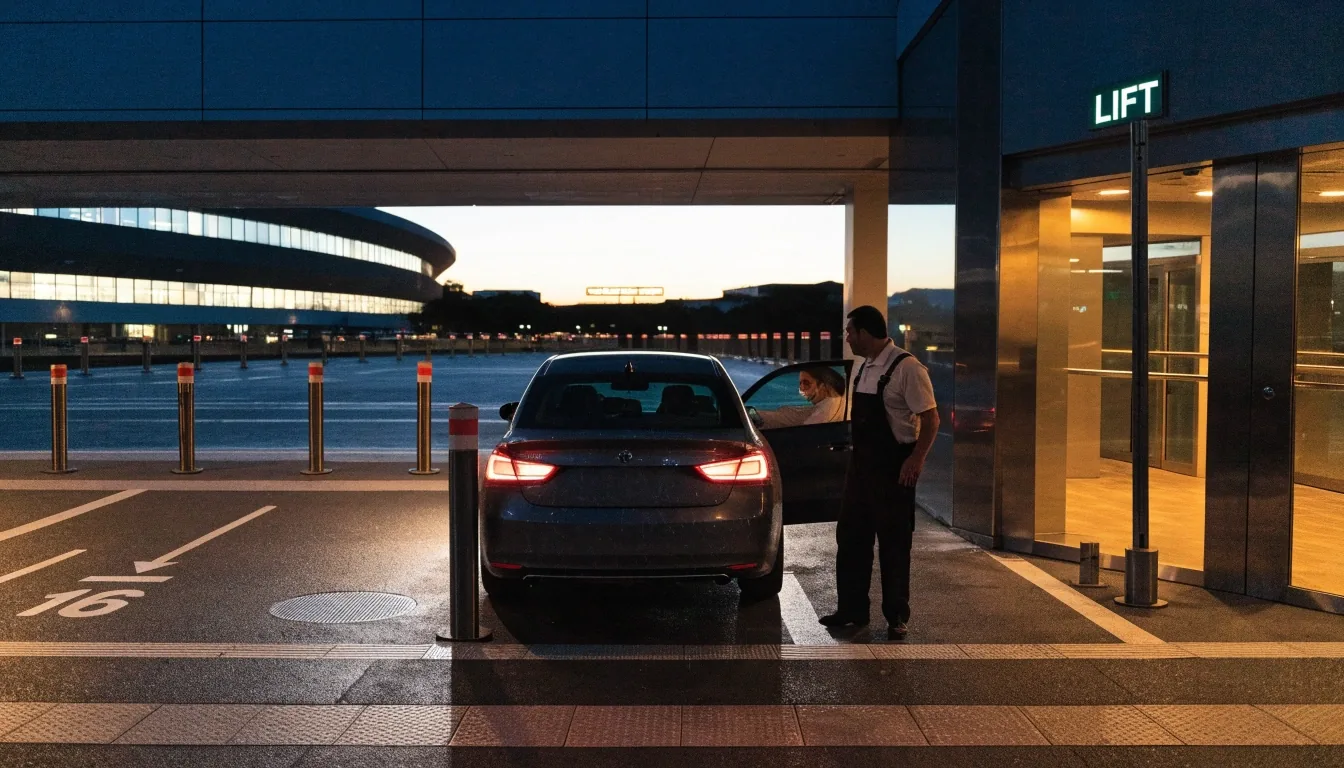
A good kerbside routine is simple: pull forward, help with doors and bags, confirm the passenger is steady and oriented, then leave the zone. If you need to park and walk in, follow signs to the short-stay or pre-booked car park instead of circling the roadway.
For sydney airport parking trips where the driver stays with the car, the car park remains the right choice — the kerb is for minutes, not for waiting on delayed arrivals.
Collections
Pick-up zone rules and the free short-stay window
Sydney Airport identifies free short-stay rules for pick-up zones. A well-timed collection does not attract a fee — waiting does.
Check pick-up zone rulesTime it to the kerb, not the landing
Aircraft touchdown is not kerb-ready. Wait until the passenger has bags and is walking to the meeting point before you enter the zone. If the flight is delayed, move the car out and return when they are actually ready.
Do not use the zone as a holding area
Circling or parking with hazards on creates congestion and charges. The rules favour active pick-up: arrive, load, leave. For longer waits, use a car park bay where the clock is clear.
A useful fallback near the airport
Blu Emu also offers free parking for up to an hour, which helps when arrivals slip. Hold there, track the flight, then make one clean run to the terminal pick-up point.
Terms and conditions of entry
Sydney Airport publishes terms and conditions of entry for car park use and requires users to pay the applicable fee. Those conditions govern entry, conduct inside the car park, and the amount payable.
Applies at the barrier
The entry conditions apply whether you drive up or hold a reservation. Keep your booking reference and payment method ready, and follow posted directions on speed, parking within lines and restricted areas.
Read before you query
If a fee or overstay question comes up, the published conditions are the reference point. This page points to them in plain language — it does not replace them.
Terms covering online reservations
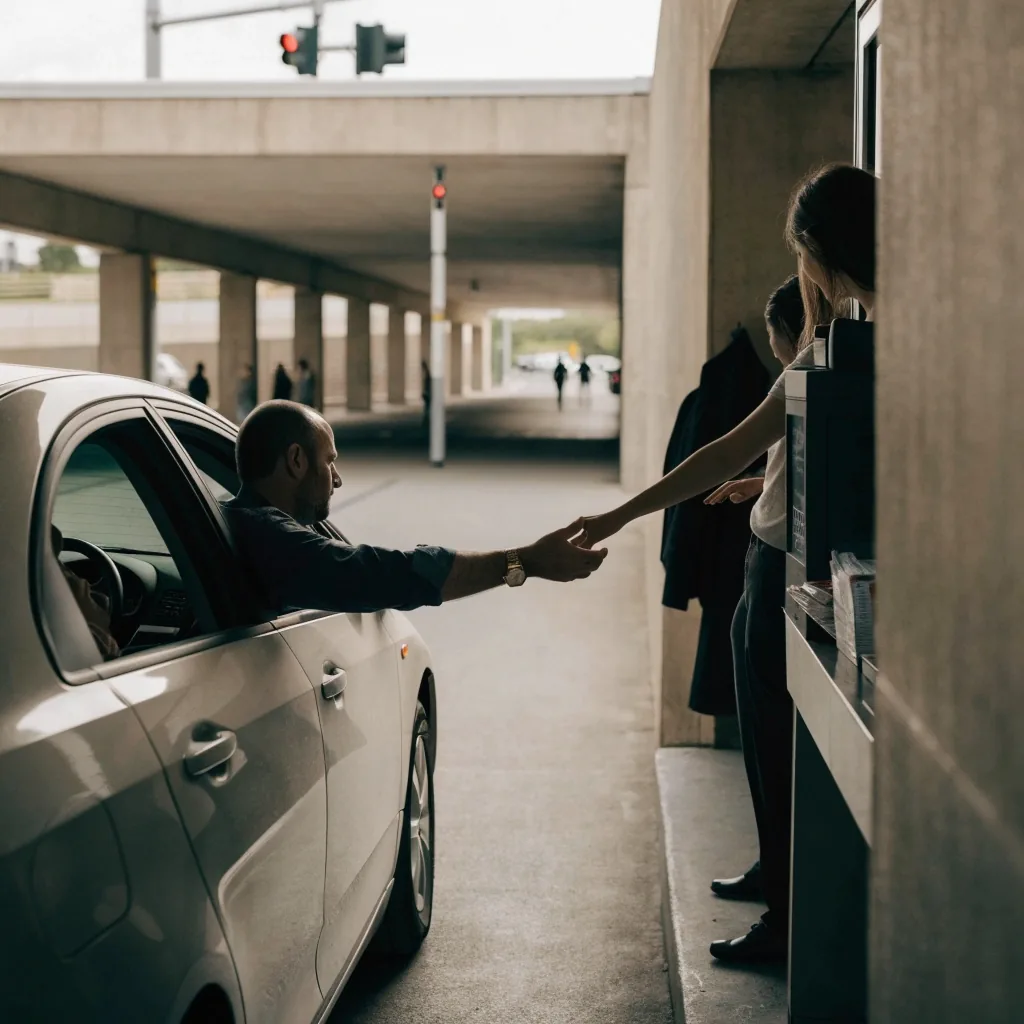
Online reservations are governed by Sydney Airport terms covering self-park and valet reservations. A reservation is a contract with conditions on handover, collection and fees.
In practice, read those conditions before you travel — not when you need to query a charge. Check change and cancellation handling, grace periods and what happens if you arrive early or leave late.
Booking for Terminal 1, 2 or 3? Confirm the product name on your confirmation matches the entry you drive to.
Common questions on bays and rules
Short answers for permit holders sorting airport parking before a flight. For anything unusual, include your terminal and product when you ask.
Phone +61 2 9667 9111 · [email protected]
Do I need to pre-book an accessible bay?
You book the car park product, not a single numbered bay. Accessible bays are allocated within the parks, so name the need for lift or step-free access in your enquiry and arrive with time to be directed to the right level.
Can I wait in the pick-up zone if the flight is early?
No — the zones are for active pick-up. If you arrive before the passenger is kerb-ready, keep clear in a car park or at the Blu Emu free short stay, then return for one clean collection.
Where does this summary end?
Nothing here overrides the airport published terms, car park entry conditions or permit requirements. Where detail conflicts, the airport material governs. If unsure how a rule applies to your trip, ask before you travel with terminal and product in the question.
Unsure which bay or rule fits your trip? Ask before you drive.
Send your terminal, travel date and access need — lift proximity, step-free route or extra transfer space — and parking support will point you to the right precinct and product.